

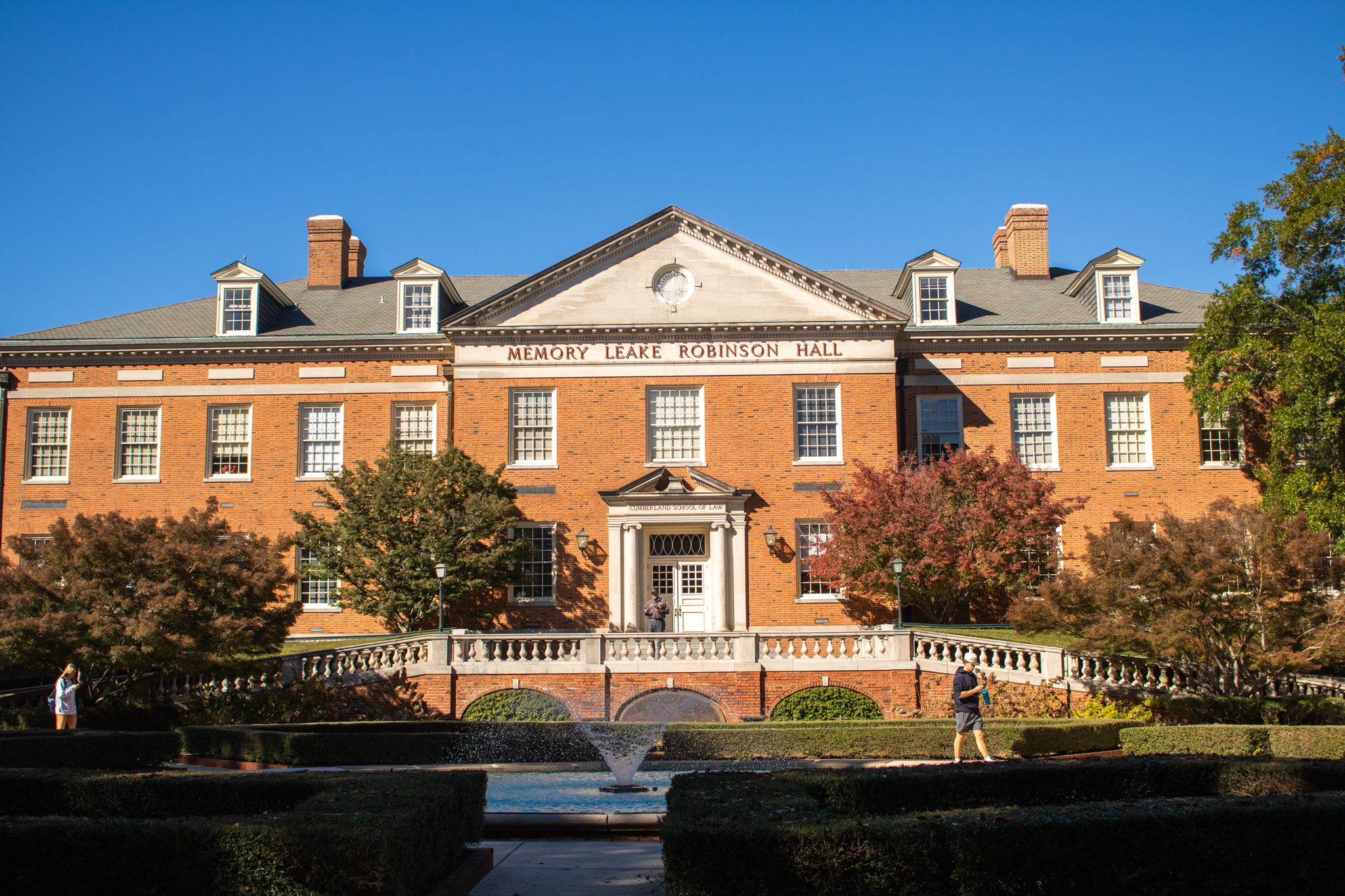
Sheri Garrett knows many of Cumberland School of Law’s newest students by name.
“I consider each one of them an image bearer of Christ,” said Garrett, the law school’s One Stop adviser. “Money is a very sensitive thing to talk about.”
That conversation got harder this year. The 162 first-year law students who arrived this fall are the first Cumberland class to pay for school under the One Big Beautiful Bill Act, the federal law known as OB3.
Beginning July 1, the law ended Graduate PLUS loans for new borrowers. Those loans once let students borrow up to the full cost of attendance. Now, law students and others in professional programs can borrow up to $50,000 a year and $200,000 total in federal loans. Master’s students, including those in Samford’s MBA and Master of Laws programs, are capped at $20,500 a year and $100,000 total.
Students who borrowed for their current program before July 1 keep access to Grad PLUS under legacy provisions.
For new law students, the math is tight. Cumberland’s tuition and fees for 2026-27 total $48,764 before rent, food or books, according to Samford’s cost-of-attendance estimates. The average entering scholarship is about $20,000, Garrett said, and students with smaller awards must find the difference elsewhere, usually private loans.
Unlike federal loans, private loans require a credit history. Garrett said many students whose parents shielded them from debt arrive with none and need a cosigner.
She worries most about first-generation students.
“They don’t have a resource to help them … to make sure they are building a good credit history,” she said.
Samford responded by naming 11 preferred private lenders after reviewing rates, fees and repayment terms. Law students also get free access to a certified financial adviser through the school’s partnership with AccessLex, a nonprofit serving law students.
Garrett is researching whether Cumberland could one day lend directly to students, as some law schools do, though she said that may never happen.
Not every Samford program feels the squeeze. At Beeson Divinity School, scholarships mean few students borrow at all.
Deric Thomas, Beeson’s director of operations, said the school is “really ahead of the curve” on scholarships, which keep students from “having to utilize loans.”
“The new changes that the government has put in really won’t affect our students at all,” Thomas said. Beeson has seen no drop in applications or enrollment, he said.
Every full-time Master of Divinity student receives a baseline scholarship covering about 30% of tuition, according to Beeson’s website. Individuals, local churches and endowed funds add more, including the full-tuition Our Risen Lord scholarships, whose anonymous donor agreed this year to fund them in perpetuity.
Beeson enrolls about 190 students and plans to grow to 229 by 2030.
For Garrett, the goal is the same for every student who sits across from her desk. They should be intentional with their life, and their plan when making financial decisions, and her goal is to help them achieve that.
Staff Reporter
Want the Crimson delivered to your inbox each week? Subscribe below!