

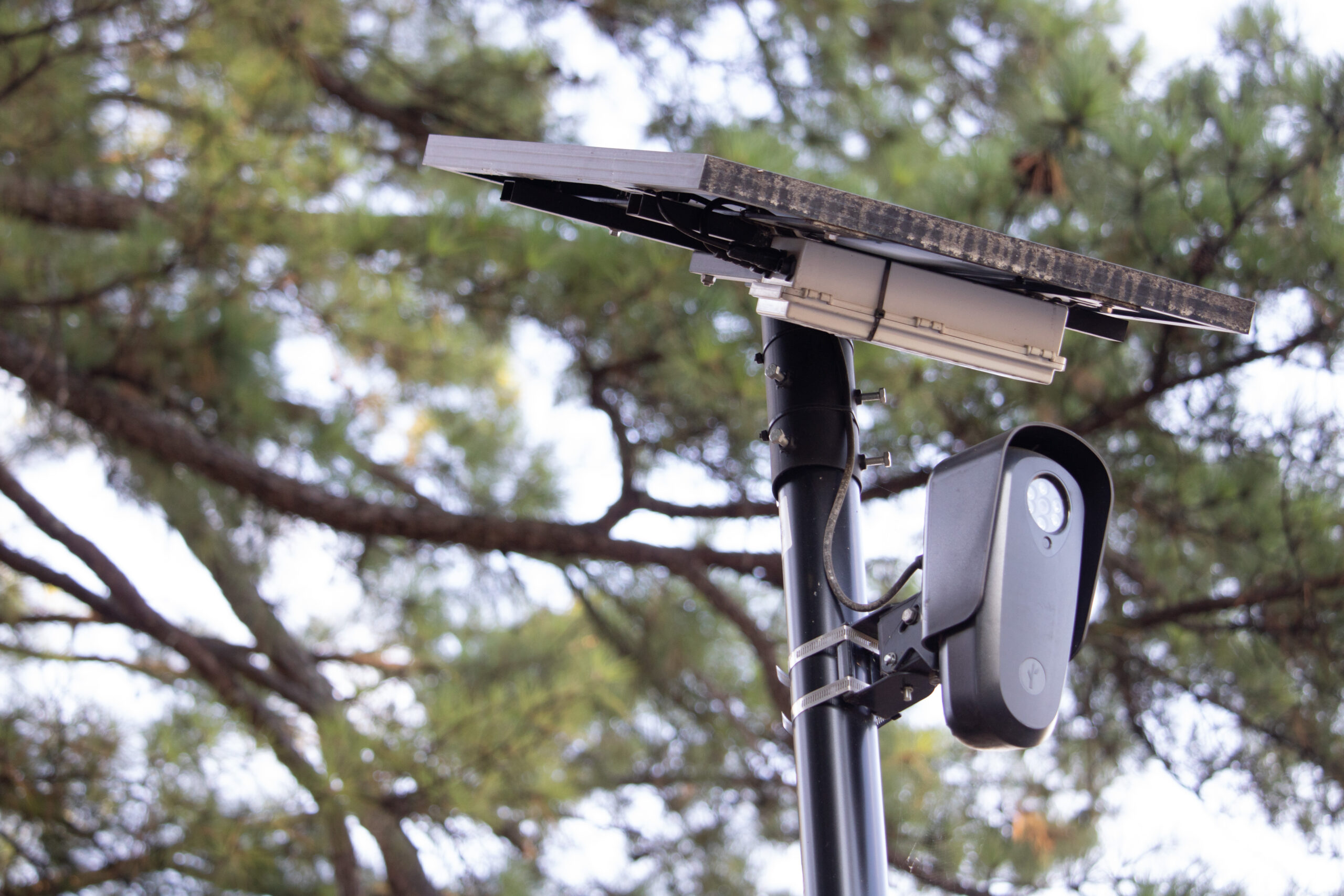
The gradual introduction of Flock Safety cameras to Samford University’s campus is prompting discussion among students and faculty about how the university balances campus security with concerns surrounding surveillance technology.
The cameras, which automatically capture information from passing vehicles, are part of the Samford Department of Public Safety’s broader network of security cameras. At least six Flock cameras have been documented on campus, though additional cameras may be located elsewhere.
“Our entire inventory of security cameras is designed to help us proactively protect the campus community and also aid in successfully resolving outstanding law enforcement interactions and investigations,” said Samford’s DPS Chief Officer, Tommy Taylor.
According to Taylor, the Flock cameras specifically alert the department when vehicles or license plates “tethered with outstanding warrants are being driven onto campus property.”
Without the technology, he said, DPS would likely only become aware of those vehicles through a separate police interaction.
“While I understand that Flock cameras are a current trending topic for some, please know that they are not new and have been widely in use for quite some time,” Taylor said.
Unlike a traditional security camera system operated entirely by an institution, Flock Safety is a third-party company that provides automated license plate reader technology to law enforcement agencies, municipalities, businesses and other organizations.
The cameras capture vehicle information that is processed through Flock’s cloud-based system, a structure that has contributed to broader questions surrounding the privacy implications of the technology.
“It is important for campus to know that any information obtained through any of our camera systems or subsequent investigations is held in strict confidence,” Taylor said.
Dr. Theresa Davidson, the director of the geography and sociology department at Samford, said concerns about the cameras reflect a larger national conversation surrounding surveillance and privacy.
“Public opinion shows an increasing number of people in the U.S. are opposed to Flock cameras in their communities due to concerns about privacy,” Davidson said. “Interestingly, young people tend to be more concerned about the presence of the cameras while older people tend to be more supportive.”
Davidson said those concerns exist within “a broader context of distrust and suspicion of ‘big tech,’ along with worries about privacy.”
From a sociological perspective, however, Davidson said the conversation about crime extends beyond the tools used to solve individual cases.
“If we are concerned about crime, I would argue we need to look to the causes of crime, and therefore focus on crime prevention,” Davidson said.
She pointed to factors including inequality, persistent poverty, educational disparities, and wage stagnation as part of the broader causes of crime. Addressing those issues, she said, requires longer-term policy solutions.
“Crime-solving tools are likely seen as a ‘quick fix’ as opposed to the policy work it would take to reduce crime overall,” Davidson said.
Some members of the Samford community express concern.
“Honestly, I’m a little unsettled by the presence of them on campus” says Samford junior Sarah Cameron.
The presence of Flock cameras on campus puts Samford within a broader conversation about the use of automated license plate readers and the balance between security and privacy.
“Using this new technology that, from what I’ve seen, is wildly unpopular and that is associated with people getting tracked to get deported, arrested, and detained, creates distrust between me and the university,” Cameron said.
While DPS describes the cameras as a longstanding tool for identifying vehicles connected to outstanding warrants, concerns from members of the campus community center on how increased surveillance, and the inclusion of a third-party company, fits within that balance.

Staff Reporter
Want the Crimson delivered to your inbox each week? Subscribe below!