

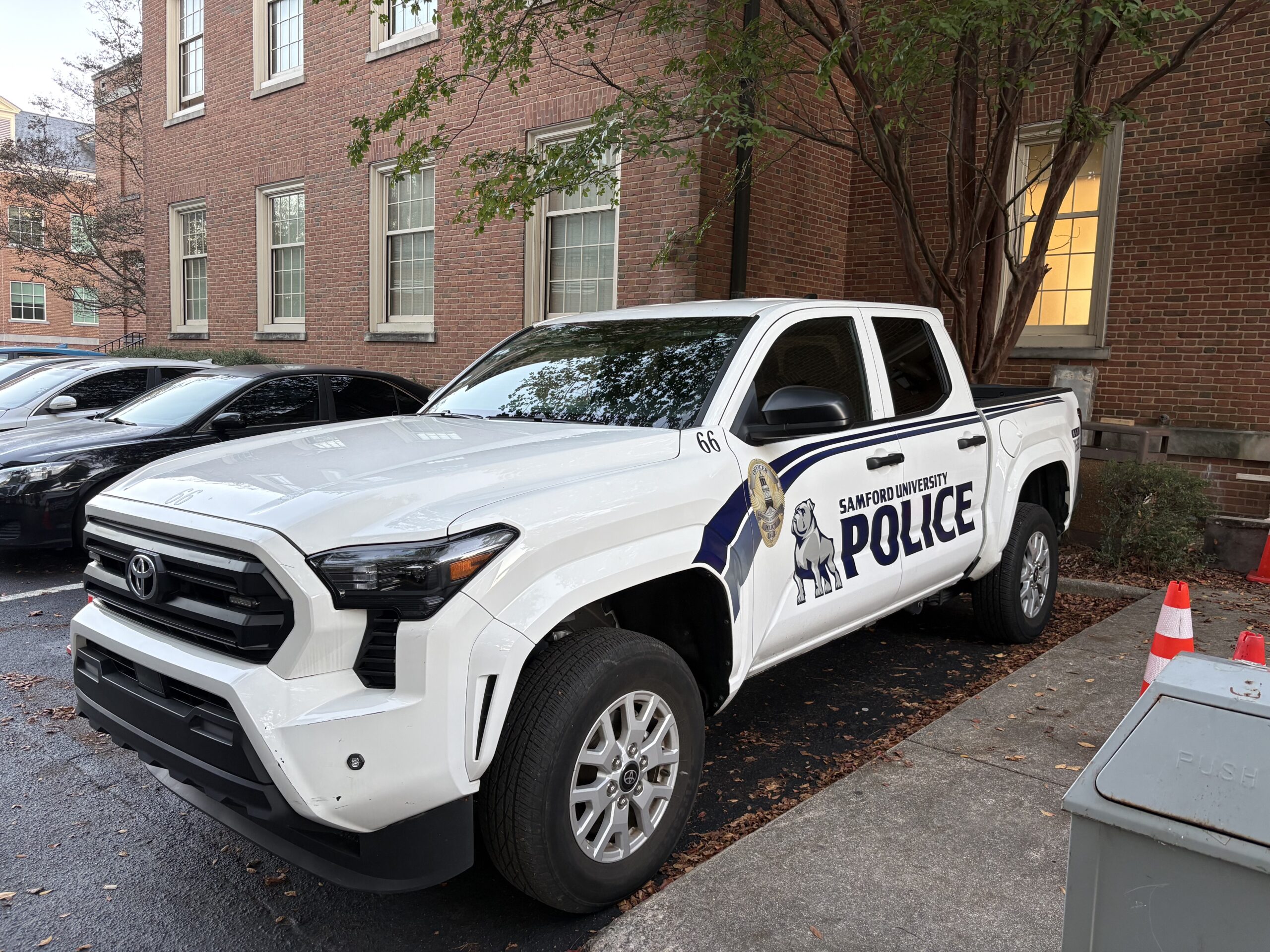
On Sept. 28, 2026, Samford released its annual security report, providing updated campus crime statistics and information about the university’s safety policies and reporting procedures.
The report, required under the federal Jeanne Clery Campus Safety Act, includes crime statistics from 2023 through 2025. Samford collects statistics from campus reports, local law enforcement agencies, campus security authorities and other reporting agencies.
The report shows an increase in 2025 in several reported crimes on campus, including rape, fondling, burglary and stalking, bringing questions of campus safety and transparency closer to home for students.
Among the most notable changes, two rapes were reported in on-campus residences in 2025, compared with one in 2024 and none in 2023. Two burglaries were also reported in on-campus residences after none were reported in the previous two years.
“Any crime is one crime too many, and we take every single call and report seriously and take needed action accordingly,” Taylor said. “The relative consistency in the campus crime data also further shows DPS’s continual commitment to campus safety.”
The numbers come as national attention has recently turned to campus safety, and universities’ handling of sexual misconduct have received increased national attention. Recent allegations involving Cornell University have fueled conversations about what students should know when serious incidents are reported on college campuses.
Taylor said students who experience sexual assault often seek help outside DPS, like through the CARE team and Title IX, and those channels do not always contribute to Clery statistics. The numbers contained in the report only represent incidents that are reported to DPS through official channels.
Those offices can share certain information with DPS, Taylor said, while maintaining confidentiality for students seeking assistance.
For senior Emily McDowell, how the university communicates about serious incidents is also a question of trust for her.
“Not to boil it down to a PR thing, because it’s more important than that, but I feel like if Samford’s really trying to protect their reputation with stuff like that, there’s only so many times you can brush it under the rug,” McDowell said. “Then all of the sudden, there’s gonna be a point where it flips and people are gonna get outraged.”
Senior Sarah Osorio similarly said students should be made aware when serious incidents occur without identifying the people involved.
“I also feel like, because we’re a private Christian university, these kinds of things tend to get swept under the rug a lot,” Osorio said. “The public doesn’t need to know who was involved, but the fact that it is happening should be made more known to the student body.”
Osorio said that this information can matter when students are trying to determine whether an incident is isolated, or part of a larger problem they should be concerned about.
“What if it’s not a one-time occurrence?” Osorio said. “What if this person or these people do it more often? And it’s happened to girls, women, and they’re scared to come out and talk about it?”
Taylor said DPS aims to prevent incidents while ensuring students know where they can turn when something does happen.
“The more proactive and engaging we can be, the more we can positively impact, one, students from finding themselves in these situations, but two, making them fully aware that there’s resources for them, should those things happen,” Taylor said. “I just want them to know that there’s people to call and that we’re going to try to help them.”
News Editor
Want the Crimson delivered to your inbox each week? Subscribe below!