

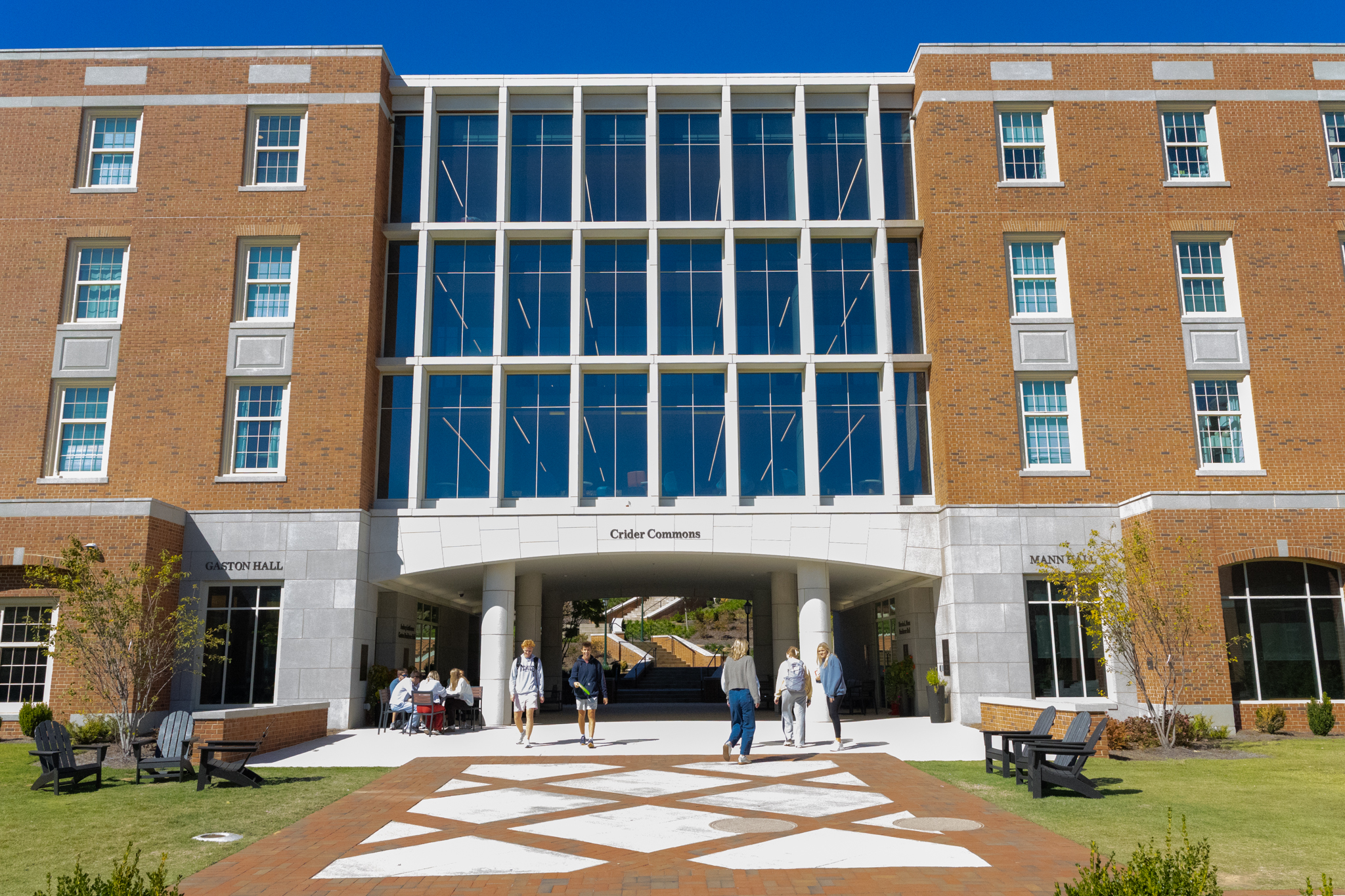
Students living in Samford University’s newest freshman residence halls have faced weeks of elevator outages this semester, raising concerns about accessibility and the challenges students with mobility limitations face navigating campus.
The Gaston and Mann building has three elevators in total, with two of them being behind ID card scanners, making them only accessible to the residents of that respective side. The central elevator accesses upper-level common spaces.
According to Samford Residence Life, the central elevator was taken out of service during the first week of September after a third-party maintenance provider found a part that needed replacement.
The east elevator was also out of service for approximately one week in early October before returning to operation Oct. 8. The west elevator remained operational throughout that period.
According to freshman Gaston resident Haylee Goitia, the problems were particularly frustrating because students had expected to have access to functioning elevators when they moved in.
“I’ve talked to people who live in Vail, who have stairs and they don’t have an elevator, but because we came into the school year preparing to have an elevator, I think it made it a little more inconvenient,” Goitia said.
Residence Life said the replacement part for the central elevator is expected to arrive shortly, with the elevator anticipated to return to service this week.
“We maintain regular contact with our elevator maintenance company,” Residence Life said in a statement. “We are fortunate to work with a company that responds to our needs promptly.”
Residence Life also said the Office of Accommodations has established protocols for elevator outages. When an elevator cannot be repaired the same day, Residence Life notifies the office, which is responsible for developing alternative arrangements for affected students.
For sophomore resident assistant Eva Davis, however, the outages have highlighted concerns extending beyond the elevators themselves.
Davis, who currently serves as a Resident Assistant (RA) in Vail and lived in Gaston last year, questioned whether sufficient safeguards exist for students who depend on elevators for accessibility.
“If you’re going to promote that and make that the ADA dorm, you need to have safeguards,” Davis said.
The concerns surrounding the residence halls reflect what Davis sees as a larger accessibility problem across Samford’s campus.
Davis’ mother has a muscle disorder, an experience that has shaped how she views the campus and the obstacles that might go unnoticed by students without mobility limitations.
“On campus, I’m always aware of just lips all over the ground that would trip her up,” Davis said. “If I were ever to walk with my mom, I would need to take her a different way because my path is not a safe path for her.”
Beyond uneven walkways and the campus hills, Davis said accessible entrances and routes are sometimes located far from the most direct paths between buildings.
“It’s exhausting to have to go all the way to the far side of the building to get in,” Davis said. “There’s not accessible routes on the easy side, so they’re having to build in 25 extra minutes in their schedule to get around to the other side.”
Davis also pointed to campus programming as an area where accessibility could be improved. During Family Weekend last year, she said, events concentrated around the Quad near Reid Chapel created difficulties for visitors who needed accessible routes from the freshman residence halls.
She has advocated for more indoor programming in locations such as Harry’s Coffeehouse, where elevators, accessible bathrooms and level surfaces can make events easier to navigate.
Although Davis acknowledged that Samford’s terrain creates challenges, she believes more can be done to make the campus accommodating to students and visitors with disabilities.
“Obviously the campus can’t be 100% accessible because of the way it’s built with the hills,” Davis said. “But I feel like there’s more we could do, to make it easier on people.”
For Davis, the elevator outages represent one example of the larger issue that accessibility is often considered only when something stops working.
“We don’t often see things as an obstacle, because they aren’t an obstacle to us,” Davis said.
News Editor
Want the Crimson delivered to your inbox each week? Subscribe below!