

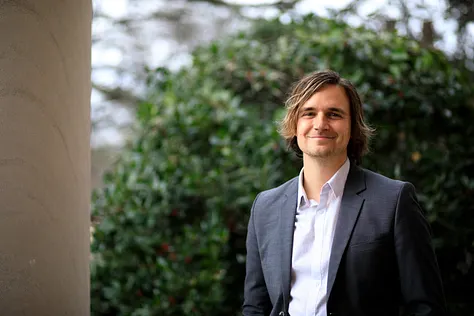
When the Director of Samford’s Commercial Music Program Dr. Steven Potaczek set out to address the problem of artificial intelligence (AI) in the creative arts, he didn’t intend to write a book about it.
The seeds of what would become Potaczek’s book, “Fear Not, Creative: How to Futureproof Your Artistic Career in the Age of AI,” began in the questions he was asked by students and parents of Samford’s Commercial Music Program.
“There’s so much hype in the media [about AI] and there really has been since 2023,” Potaczek said. “I had students and parents in my program who are like, what does this mean? What kinds of jobs are going to be available? There is a lot of fear.”
In response to these questions, Potaczek began researching the problem.
“I started putting together what I thought were lectures,” Potaczek said. “Next thing I know, I (realize that) these aren’t lectures, they’re chapters.”
After this realization, Potaczek got in contact with a publisher and the book was born. The book’s primary focus is on the viability of an artistic career in an AI-saturated landscape. For Potaczek there are key aspects of human art that separate it from AI generated products.
“When we create, it’s something homegrown,” Potaczek said. “But when you ask AI to do it, it’s like going up to a vending machine and pushing the button. Out pops a bag of potato chips and then you say, ‘I made this,’ just because you pushed the button. That’s the difference.”
Potaczek sees this difference as a source of value for human art.
“People are going to get to a place where they distrust almost everything online,” Potaczek said. “That’s going to raise the value of real things, things that are vulnerable, things that are authentic, things that are intimate. Supply and demand right?”
For Potazcek, this will not only increase the value of human art, but its quality. “When AI slop saturates the market, we’re going to have much more demand for something that’s real and excellent and beautiful,” Potaczek said. “I think it’s going to force a creative Renaissance that we’ve probably not seen for a long time.”
This hope for the future of artist’s careers is shared by many in the student body. For Sophomore Theater Major Haley Binford, people’s concerns about AI replacing human artists miss the point of why humans value art in the first place.
“We’ve said so much over human history about love and sorrow and friendship,” Binford said. “The reason that we tell stories about the same things over and over again is because there’s always something new to say about it when there’s always a new person behind it. That’s what you lose when you take the person out of it.”
Sophomore Graphic Design Major Lily Lott also affirmed the place of humans in the creation of art.
“Art is one of the most human things out there, I think,” Lott said. “It’s imperative that it’s a human doing it.”
The book is available for purchase on Amazon.
Staff Reporter
Want the Crimson delivered to your inbox each week? Subscribe below!